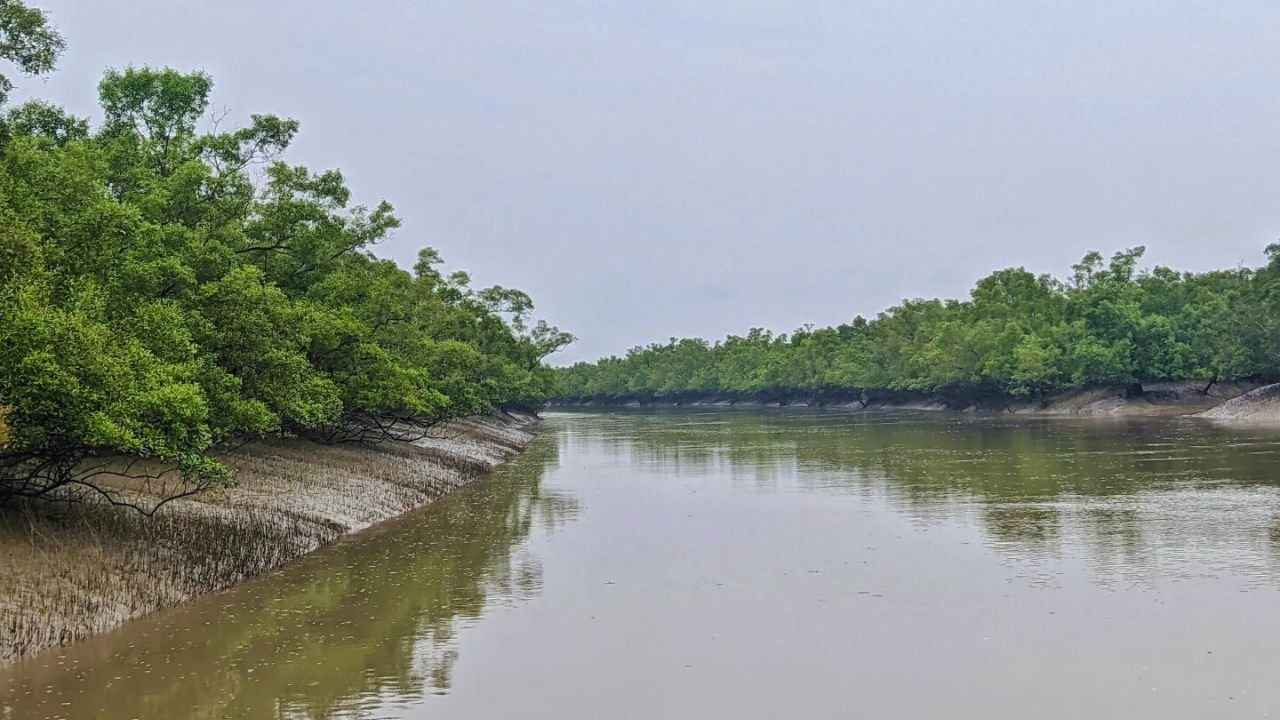
Sundarbans: Exploring the World’s Largest Mangrove Forest
The Sundarbans isn’t just a forest; it’s a sprawling, watery labyrinth and a UNESCO World Heritage site. Spanning roughly 10,000 square kilometers across Bangladesh and India, the Bangladesh portion (6,017 sq km) is a biodiversity hotspot. Named after the “Sundari” trees, this region is the legendary home of the Royal Bengal Tiger.
Why Visit?
It is a living museum of flora and fauna. With over 350 species of plants, 270 species of birds, and 42 species of mammals (including spotted deer and macaques), it is a dream for wildlife photographers and nature lovers.
Best Time to Visit
To make the most of your trip, timing is everything.
- Peak Season (November to February): This is the “cool” season. The rivers are calm, the weather is pleasant, and you can access the deepest parts of the forest.
- Off-Season: You can visit the outskirts (like Karamjal) year-round, but the deep forest is best avoided during the monsoon (June–August) due to heavy rains and rough waters.
Top Attractions & Spots
The forest is massive, but the Forest Department permits tourists to visit specific zones. Most travelers enter via Khulna or Mongla.
| Spot | Highlights |
| Karamjal | The closest point to the mainland. Features a crocodile and deer breeding center and a wooden trail. Great for a day trip. |
| Harbaria | Famous for its atmospheric wooden trail through the deep forest. There’s a watchtower for a panoramic view. |
| Katka & Jamtola | These are the “wild” spots. You’ll likely see herds of spotted deer. Jamtola has a secluded beach and a tiger-watching tower. |
| Hiron Point | A key sanctuary for wildlife. It’s one of the best places to spot tigers, monkeys, and crocodiles. |
| Dublar Char | A small island known for its fishing community and “Rash Mela” festival. It’s a great place to see the local way of life. |
How to Get There & Tour Logistics
You cannot simply “hike” into the Sundarbans. Because of the tides, the tigers, and the legal requirements, you must travel by boat and with a permit.
1. The Easy Way: Tour Operators
For international travelers, booking a 3-Day/2-Night cruise is the most seamless option. These packages usually include:
- Accommodation on a ship/launch.
- All meals (authentic Bengali cuisine).
- Forest permits and armed security guards (required by law).
- Expert guides.
2. The DIY Way (Day Trips)
If you are short on time, you can rent a boat from the Mongla Ferry Ghat for a day trip to Karamjal or Harbaria.
3. Transportation to the Gateway
- By Air: Fly from Dhaka to Jessore, then take a 2-hour drive to Khulna or Mongla.
- By Bus/Car: Thanks to the Padma Bridge, you can drive from Dhaka to Khulna or Mongla in about 5 hours.
- By Train: Several trains run from Dhaka to Khulna (approx. 8–10 hours).
Estimated Costs for International Travelers
Tour Packages
- Standard Cruise: $60 – $130 per person.
- Luxury AC Cruise: $150 – $220 per person.
Official Forest Fees (Foreigner Rates)
Note: Bangladesh has a tiered pricing system where foreigners pay higher entry fees than locals.
| Category | Fee (Approx. USD) |
| Sanctuary Area Entry (Daily) | ~$13.00 (1,500 BDT) |
| Non-Sanctuary Area Entry (Daily) | ~$9.00 (1,000 BDT) |
| Karamjal Entry | ~$5.00 (575 BDT) |
| Video Camera Permit | ~$2.50 (300 BDT) |
Where to Stay
- On the Water: Most people stay in cabins on their tour ships. It’s an incredible experience to wake up to the sounds of the forest.
- Eco-Resorts: There are modern, eco-friendly resorts in Mongla and Munshiganj (Satkhira) for those who prefer staying on land.
- Khulna City: If you prefer urban comfort before your trek, hotels like City Inn or Castle Salam are top-tier options.
Essential Tips for World Travelers
- Connectivity: Mobile signal is non-existent in the deep forest. Consider it a digital detox!
- Health: Carry your own filtered water and a basic first-aid kit. Malaria/Dengue precautions (repellent) are a must.
- Safety: Always stay with your group and listen to your armed forest guard. Remember, you are in tiger territory.
- Eco-Ethics: Do not throw plastic into the water. The Sundarbans is a fragile ecosystem; leave only footprints.
- Attire: Wear neutral-colored clothing (brown, olive, green) to blend in. Bright colors can startle wildlife.